You Don’t Need Permission to Build Something That Matters
Permission is the most dangerous illusion in leadership. Too many great ideas stall because someone is waiting for consensus or a green light that never comes. The truth is, the biggest innovations in healthcare, EMS, and education didn’t start with approval; they started because someone built anyway. If you wait for permission, you’ll always be behind.

Five years ago, I started building tools on nights and weekends. I didn’t have investors, a big budget, or even a clear roadmap. What I did have was a belief: if a problem is real, you don’t need permission to start solving it.
That simple conviction has shaped every step of my journey - from launching Phoenix Institute to building Veritas Technology Solutions, creating a global puzzle game, and now working to transform how EMS professionals (and beyond) prepare for their careers. Each of these started without approval, funding, or someone telling me, “Yes, this is the right move.” They started because the problem in front of me was too important to ignore.
And here’s the part worth paying attention to: this isn’t just my story. This is the story of innovation across healthcare, public safety, technology, and education. Progress seldom begins with a stamp of approval. It begins with someone deciding to act.
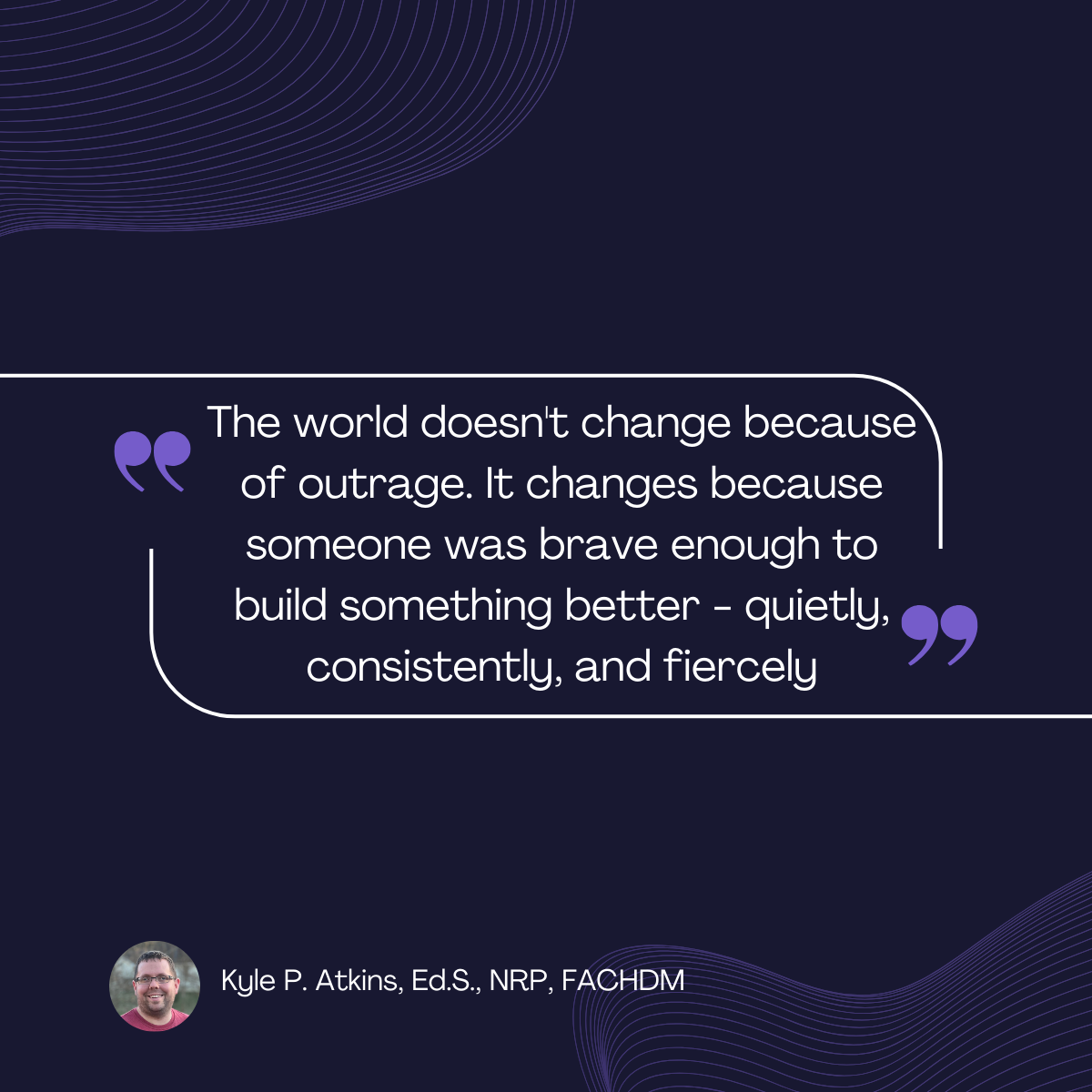
The world doesn’t change because of outrage. It changes because someone was brave enough to build something better - quietly, consistently, and fiercely
Permission Is the Most Dangerous Illusion in Leadership
We live in systems built on policies, approvals, and committees. In healthcare, new initiatives often stall out because leaders are waiting for consensus, compliance, or someone higher up to validate the risk. In EMS, educators often hold off on trying new teaching methods until they’re sanctioned by accreditation bodies. In tech, startups die on the vine because founders wait for venture capital before launching their MVP.
But here’s the truth: permission is an illusion.
The market won’t give it to you. The system won’t hand it to you. Even well-meaning leaders won’t always recognize the value of your idea until you show them what it can do.
Think about it: some of the most transformative changes in healthcare didn’t come from people who had permission. Telemedicine? Rejected by many traditional providers for years until patient demand forced adoption. Simulation-based training for EMS and nursing? Initially dismissed as “not realistic enough.” AI-driven diagnostics? Distrusted and sidelined until early adopters proved that outcomes could improve.
If you wait for permission, you’ll always be behind the curve.
Imperfection as a Strategic Advantage
When I launched Phoenix Institute, it wasn’t a flawless operation. We didn’t have a sprawling campus or millions in funding. What we had was passion, creativity, and a willingness to rethink what EMS education could look like. We built anyway.
When I launched BLACKBOX://, it wasn’t an enterprise-backed game studio release (and it was an initial flop too). It was an experimental project, built during a hackathon, designed to challenge people to think differently about puzzles and problem-solving. It went on to rank 317 out of 5,800 global projects. Not because it was perfect, but because it was real. It has 24 players now, but two months ago, it was an idea because I got irritated at a board game a few years ago that had a great storyline and then just ended without having any replayability.
When I began Veritas Technology Solutions, it wasn’t a polished startup with a slick pitch deck. It was a collection of ideas to solve problems in narcotic diversion, healthcare value analysis, and EMS data integration. Today, the products that are built under Veritas are gaining traction - and 95% of them haven’t even made it to market yet.
The through-line? Starting imperfectly creates momentum.
Perfection is paralyzing. If you’re waiting until the idea is flawless, you’ll never launch. Trust me, I deal with decision paralysis daily (I still haven’t bought a new office chair because I want the right one). But if you start - even with the rough version - you gain feedback, credibility, and traction. In leadership, that’s often the difference between watching innovation happen around you or being the one driving it.
Building Credibility by Building Things
One of the fastest ways to gain credibility in any industry is not to talk about what should be built; it’s to build it.
Healthcare leaders respect data. Educators respect results. Technologists respect working code. The quickest way to shift a conversation is to put something tangible on the table.
During the height of Phoenix, my staff and I would always talk about how to improve and innovate. One day, instead of simply saying “let me think about it,” I simply said yes to a creative and new idea that I thought was not going to be successful. I was wrong - and my team was right. I can’t remember the exact decision, but it was one that impacted our students and led to success. Do not be afraid to take a chance on an idea that makes sense and your team is passionate about. Passionate people succeed all the time simply because they choose to believe.
That’s why small pilots matter so much. A prototype AI dashboard. A new teaching module. A one-off workshop. These are proof points that change the dialogue. Suddenly, you’re not just a person with an idea, you’re a person with a track record.
And credibility compounds. The scrappy project you start today might not be the thing that scales, but it will be the thing that convinces others to listen when you propose the next project.
Lessons for Healthcare, EMS, and Education Leaders
So what does this mean for leaders in healthcare, EMS, and education who are facing unprecedented challenges?
- Encourage experimentation at every level. Don’t just allow your teams to innovate; create structures that reward it. The nurse with an idea for reducing charting time or the instructor who wants to try a flipped classroom model shouldn’t need a six-month approval process to test it. If we take six months to say yes, we don’t lose an idea, but the trust of the same person who was brave enough to approach us with the idea in the first place.
- Recognize that “small” is not the opposite of impactful. Too often, leaders dismiss ideas because they won’t immediately scale across the system. But most innovations start local. If it works in one classroom, one department, or one EMS shift, it can be adapted and scaled.
- Shift from gatekeeping to guiding. Instead of deciding which ideas are “worthy,” position yourself as a coach helping your people refine, test, and iterate their concepts. The value that we add to our team by supporting them and guiding them is worth its weight in gold.
- Reframe failure as learning. Not every initiative will succeed, and that’s okay. Phoenix Institute didn’t become a national EMS education powerhouse. But it changed how I approach leadership, education, and it created opportunities that rippled into everything I’ve done since.
- Balance urgency with ethics. Innovation without guardrails can be reckless. But waiting indefinitely is just as harmful. Leaders have to hold both urgency and responsibility in tension by driving forward while ensuring that people and values remain at the center.
Why This Matters Now
Healthcare, EMS, and education are all at an inflection point. Staffing shortages are worsening. Burnout is accelerating. New technologies are reshaping how we teach, treat, and respond to emergencies.
We don’t have time to wait for perfect permission structures. The problems are too urgent. The stakes are too high.
That’s why the leaders who will define the next decade won’t be the ones with the most polished plans. They’ll be the ones willing to act decisively, test quickly, learn openly, and scale responsibly.
Stop Waiting. Start Building.
When I look back, I realize none of the projects I’ve built followed a linear, polished trajectory. Some thrived, some shifted, and some ended. But every single one moved the needle forward in its own way.
The lesson is simple: you don’t need permission to build something that matters.
So if you’re staring at a problem that frustrates you, don’t wait for approval. Write the first line of code. Draft the outline. Build the pilot. Run the workshop. Test the idea.
Because the most important innovations don’t begin in boardrooms or labs, they begin when someone decides today’s problems are too important to wait for tomorrow’s approval.
See you soon,– Kyle
Written by Kyle P. Atkins, Ed.S., PMP, CVAHP, NRP, eFACHDM
Founder & Chief Architect of Veritas Technology Solutions , and author of The Healthcare Leader’s Guide to AI and SAFEHARBOR: A BLACKBOX Story .
More in Clinical AI & Governance
Leadership Dispatch
Occasional essays on healthcare AI governance, clinical education, and executive leadership. Sent directly when a new article or resource is published—no weekly filler.