AI Didn’t Build It — A Human Did
When someone says, “Oh, you used AI for that,” the implication is clear: the work somehow counts less. But that reaction misunderstands what AI actually is. The human still defines the problem, guides the process, and decides what matters. AI doesn’t replace human ingenuity—it expands what one person can build.

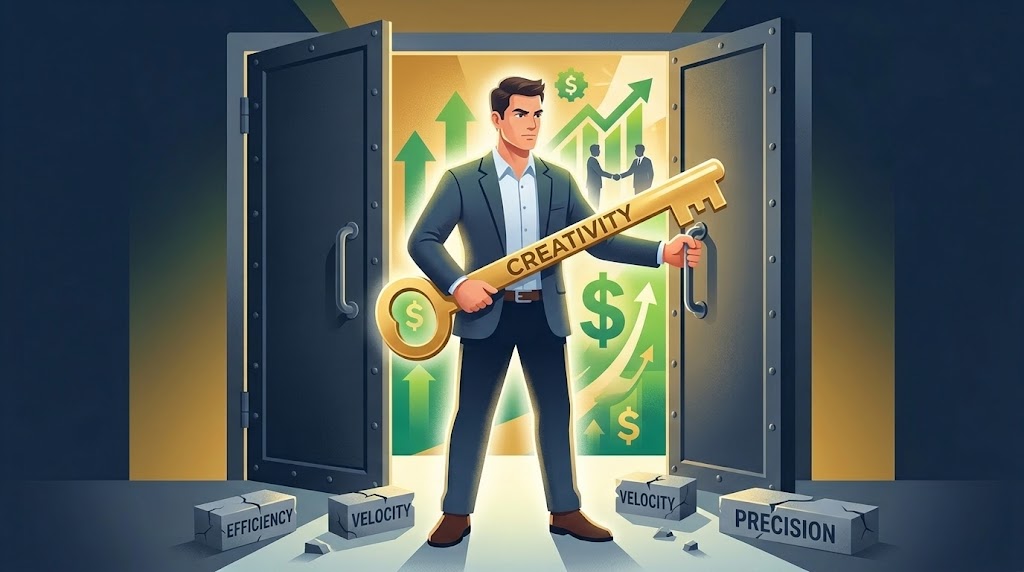
The AI Misconception
I recently had a conversation with someone who built something impressive using AI. It was thoughtful, functional, and clearly the product of real effort. But when they shared it with others, the reaction was dismissive. “Oh, you used AI for that.” The implication was obvious. If AI helped create it, then somehow it didn’t really count. As if the presence of AI erased the human contribution behind the work.
This reaction reveals a deeper misunderstanding about what artificial intelligence actually is and how people use it. AI does not replace human thinking. It amplifies it. The person who built that project still had to decide what problem to solve, define the approach, refine the prompts, evaluate the outputs, and iterate on the result. They still exercised judgment, creativity, and direction at every step. In other words, they did exactly what humans have always done when new tools emerge—they used the best tools available to build something.
Tools That Expand Capability
History is full of moments where new tools changed how work was done. When spreadsheets appeared, accountants didn’t become less intelligent—they became more efficient. When digital photography replaced film, photographers didn’t stop being artists—they gained new creative control. AI is simply the next version of that shift.
What AI really does is expand the scope of what one person can accomplish. A single developer can now prototype systems that once required entire engineering teams. Researchers can synthesize hundreds of academic papers in hours rather than weeks. Educators can generate learning simulations that previously would have required enormous time and resources.
The capability of the human hasn’t disappeared. The capability of the human has grown. But when people dismiss AI-assisted work, they focus on the tool rather than the thinking behind it. That’s like dismissing an architect because they used CAD software instead of drafting everything by hand.
The Human Still Does the Hard Part
Using AI effectively is not passive. The human still defines the problem. The human still decides what success looks like. The human still filters signal from noise. In fact, AI often makes human judgment even more important.
AI can generate options. It can accelerate exploration. It can surface possibilities that might not have been obvious at first glance. But it cannot decide what matters. That responsibility still belongs to the person guiding the system.
Someone who produces something meaningful with AI didn’t bypass the work—they directed the work. They demonstrated the ability to guide a powerful system toward a useful outcome. That is not a lack of skill. That is a new form of skill.
Augmented Intelligence
The real shift we are seeing is not AI versus humans. It is humans working with AI. The most effective professionals in the next decade will not be the ones who refuse to use AI out of principle. Nor will they be the ones who blindly rely on it.
The leaders will be the people who know how to collaborate with it. They will understand when to use AI for speed and when to rely on human judgment for nuance. They will treat AI as a thinking partner, not as an authority.
This is already happening across software development, healthcare, research, and education. The people who learn to guide these systems well will build faster, explore deeper, and solve problems that once required entire teams.
The Question That Matters
There is also a cultural hesitation around AI right now. Many people are afraid to admit they used it, worried that others will see their work as less legitimate. But that misses the real point.
The real question isn’t whether AI was involved. The real question is whether something valuable was created. If a tool helps someone turn an idea into a working system, a useful framework, or a creative project that otherwise wouldn’t exist, that should be celebrated—not dismissed.
Innovation has always come from people willing to experiment with new tools. AI is simply the newest tool in that long tradition. Instead of asking “Did you use AI?” we should be asking a better question: “What did you build?” Because at the end of the day, the tool isn’t the story. The human behind it still is.
Written by Kyle P. Atkins, Ed.S., PMP, CVAHP, NRP, eFACHDM
Founder & Chief Architect of Veritas Technology Solutions , and author of The Healthcare Leader’s Guide to AI and SAFEHARBOR: A BLACKBOX Story .
More in Clinical AI & Governance
Leadership Dispatch
Occasional essays on healthcare AI governance, clinical education, and executive leadership. Sent directly when a new article or resource is published—no weekly filler.