Leadership After Postmodernism: Rebuilding Truth in an Age of Uncertainty
For years, I’ve watched postmodern thinking creep in—this idea that truth is relative, that “my truth” matters more than any shared truth. At first it seemed harmless, even inviting. But when everything becomes true, nothing really is. And when nothing is true, evil finds space to thrive.

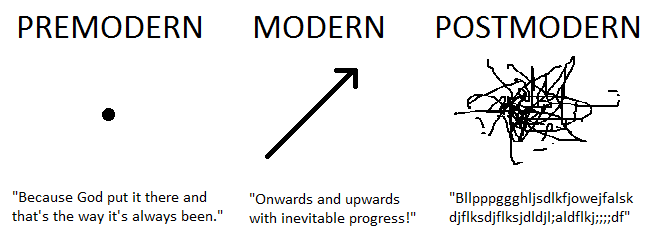
I debated whether to write this blog at all. But I care deeply about helping people understand what’s at stake. This isn’t just about the tragedy that happened this week, but about the deeper tragedy unfolding across our nation.
For years, I’ve watched postmodern thinking creep into society. At first, it seemed small—even inviting. However, over time, it has grown, and the consequences have been profound. When we lose our frame of reference, when we decide that everything can be true, we also lose our shared respect and our shared commitment to values.
The events of this week—the death of Charlie Kirk, another school shooting, even the killing of a Ukrainian woman—hit home for me. Not because they were violent incidents alone, but because they reveal something deeper: evil. Evil exists because we’ve convinced ourselves that “my truth” is the only truth, and no one else can tell us otherwise.
This isn’t new. For decades, postmodern thought has quietly shaped our culture. At its heart, postmodernism is the belief that truth is not fixed or universal, but relative—shaped by language, culture, and personal perspective. You’ve probably heard the phrase: “What’s true for you may not be true for me.”
On the surface, this sounds liberating. It allows people to question rigid systems, challenge abuses of power, and give voice to perspectives that were long ignored. Postmodernism challenged the notion that a single authority—whether government, religion, or science—had the ultimate authority.
But there’s a dark side. When nothing is universally true, then everything becomes debatable. Institutions lose credibility. Leaders lose authority. Communities lose cohesion. We are now living in the wake of this philosophical shift. And the results are visible everywhere:
- Polarization: If truth is only personal, then people are pushed into tribes, each defending “their truth” against others.
- Distrust: Without shared truth, institutions like government, media, and even science are viewed with suspicion.
- Cynicism: If all truth is relative, then nothing really matters. This breeds apathy, disengagement, and hopelessness.
How We Got Here: A Brief Look at Postmodern Thought
The seeds of postmodernism were planted in the mid-20th century. Philosophers like Jean-François Lyotard described postmodernism as “incredulity toward metanarratives”—a rejection of grand, universal stories that claimed to explain everything. Michel Foucault argued that truth itself was tied to power, suggesting that those who controlled institutions also controlled what people believed to be true. And Jacques Derrida insisted that meaning in language was never fixed, always shifting depending on interpretation.
In academic circles, these ideas were debated for decades. But eventually, they trickled into the mainstream. By the late 20th century, relativism was no longer confined to universities—it was shaping classrooms, media, politics, and eventually, leadership.
The rise of the internet accelerated it. Suddenly, every perspective had a platform. Social media turned competing truths into daily battles. Authority splintered into countless voices, each with its own claim to reality.
The result? A culture that struggles to agree on even the most basic facts.
Why This Matters for Leadership
Leadership depends on trust. And trust depends on some measure of shared truth. When leaders say, “This is the way forward,” it only matters if people believe there is such a thing as a way forward.
The crisis of leadership we face today isn’t just about politics or economics. It’s about philosophy. It’s about the cultural soil we’ve been planting in for fifty years.
- If truth is negotiable, then so is justice.
- If truth is relative, then so is morality.
- And when morality is relative, violence doesn’t shock us—it becomes just another “perspective.”
This is how we get to a place where outrage feels more powerful than reason, where institutions collapse under suspicion, and where leaders are dismissed as just another voice in the noise.
Leading Beyond Postmodernism
So where do we go from here? Leaders today face the daunting challenge of rebuilding trust in a culture that doesn’t believe in shared truth. That requires courage. It requires moral clarity. And it requires a vision that goes deeper than personal preference.
Here are four ways leaders can respond:
1. Reaffirm Shared Values
Even in a divided age, people can rally around principles like dignity, justice, and compassion. These aren’t “relative”—they’re human. Leaders must name them, live them, and call others back to them.
2. Practice Moral Consistency
When truth is under siege, integrity matters more than ever. Leaders who live by conviction—even when inconvenient—remind others that honesty and consistency still matter. Hypocrisy erodes trust; consistency rebuilds it.
3. Reject Cynicism
Cynicism is the child of relativism. If nothing is true, then everything feels pointless. Leaders must resist the temptation to give in to despair. By modeling hope, resilience, and a belief that the future can be better than the present, they show that cynicism doesn’t have to be the final word.
4. Speak Plainly
Postmodernism thrives on endless complexity and interpretation. Leaders cut through the fog by speaking with clarity. Complexity has its place, but people crave words that mean something—and leaders who stand by them.
What This Means in Practice
You don’t have to be a philosopher to lead beyond postmodernism. In fact, the best antidote to relativism isn’t abstract theory—it’s lived reality.
- In a workplace, it looks like a manager who doesn’t spin or sugarcoat, but tells the truth about challenges and opportunities.
- In a classroom, it looks like an educator who calls students to a standard of excellence and character, not just “whatever feels right.”
- In a community, it looks like leaders who call people back to compassion and service as non-negotiables.
Leaders in every sphere have the opportunity to quietly—but powerfully—rebuild trust by refusing to play the game of relativism.
The Call of This Moment
We live in a time shaped by postmodern thought, but we are not bound to it. Leaders can choose differently. We can choose to believe that truth matters, that values endure, and that morality is more than just opinion.
The stakes are high. Without shared truth, leadership collapses. With shared truth, leadership has the power to unify, to heal, and to move people forward.
Postmodern thought may have helped create the world we’re in. But leaders today have the chance to shape the world we leave behind.
Because in the end, leadership isn’t about bending to every perspective. It’s about standing firm on what is true—and helping others do the same.
Written by Kyle P. Atkins, Ed.S., PMP, CVAHP, NRP, eFACHDM
Founder & Chief Architect of Veritas Technology Solutions , and author of The Healthcare Leader’s Guide to AI and SAFEHARBOR: A BLACKBOX Story .
More in Clinical AI & Governance
Leadership Dispatch
Occasional essays on healthcare AI governance, clinical education, and executive leadership. Sent directly when a new article or resource is published—no weekly filler.